Top 5 Most Effective and Easy Exercises to Start at Home
Introduction to Home Workouts
In today's fast-paced world, finding time and resources to maintain a regular fitness routine can be a challenge, particularly for beginners. Home workouts offer a convenient and accessible solution for those looking to start their journey towards better health and fitness. Exercising at home eliminates the need for a gym membership and allows individuals to create a workout environment that suits their personal preferences and schedules. This flexibility can significantly enhance motivation and commitment to regular physical activity.
One of the most significant advantages of home workouts is the ease of access. No longer do individuals need to navigate to a gym, deal with crowds, or conform to specific class schedules. The ability to exercise in the comfort of one’s home can make fitness more appealing, especially for those new to exercising. Additionally, home workouts can be performed at any time of the day, allowing individuals to integrate physical activity into their daily routines seamlessly. This adaptability supports consistency, which is essential for building and maintaining a fitness habit.
Moreover, engaging in regular physical activity at home does not require expensive or complex equipment. Many effective exercises can be performed using just body weight, making it an economical option for beginners. This accessibility highlights the fact that achieving fitness goals is possible without the need for specialized tools or memberships. Emphasizing simplicity and accessibility can empower individuals to take the first steps towards a healthier lifestyle.
Overall, home workouts provide a unique opportunity for beginners to engage in fitness activities that are tailored to their own lifestyle and objectives. As more people recognize the benefits of exercising at home, it may lead to a more significant shift towards incorporating regular physical activity into everyday life.
Exercise 1: Bodyweight Squats
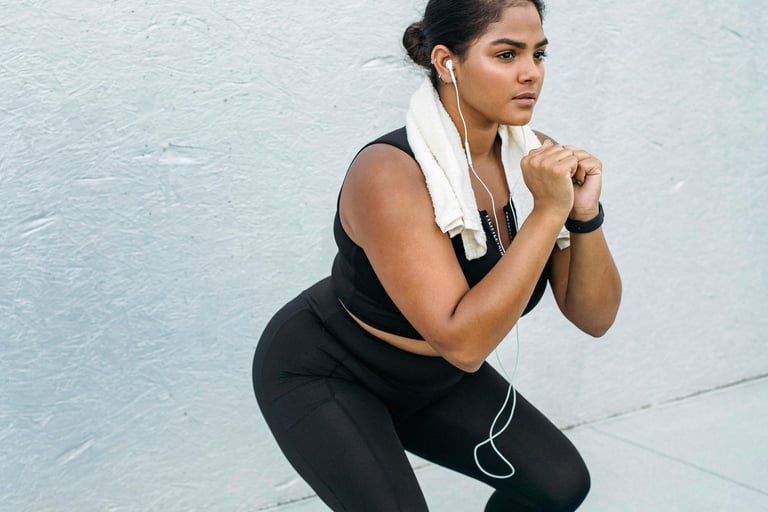
Bodyweight squats are a fundamental exercise that effectively targets the lower body, emphasizing key muscle groups such as the glutes, hamstrings, and quadriceps. As an accessible workout, it requires no equipment, making it an ideal choice for those beginning their fitness journey at home. To perform a bodyweight squat correctly, it is essential to maintain proper form to maximize effectiveness and reduce the risk of injury.
Start by standing with your feet shoulder-width apart and your toes slightly pointed outward. Keep your chest lifted and engage your core as you begin the movement. As you lower your body, bend your knees and push your hips back as if you are attempting to sit in a chair. Ensure that your knees do not extend beyond your toes to protect your joints. Lower yourself until your thighs are parallel to the ground or as low as you can comfortably go. Press through your heels to rise back to the starting position, squeezing your glutes at the top. Aim for three sets of 10 to 15 repetitions, adjusting based on your current fitness level.
To enhance the challenge of bodyweight squats, consider incorporating variations. For instance, jump squats introduce an explosive element that increases cardiovascular intensity, while split squats target the lower body differently by isolating each leg. Alternatively, you might try sumo squats, which involve a wider stance, further engaging the inner thighs. As you progress, resistance bands or ankle weights can be added to increase difficulty. Overall, bodyweight squats offer numerous benefits, including improved strength, flexibility, and balance while being easily modifiable for any fitness level.
Exercise 2: Push-Ups
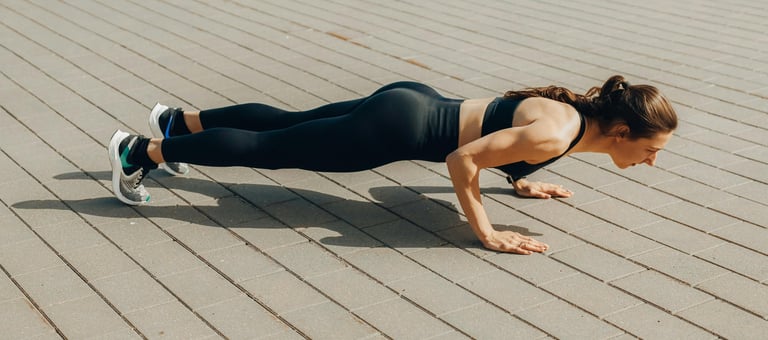
Push-ups are a fundamental exercise that targets the upper body, specifically strengthening the chest (pectorals), shoulders (deltoids), and triceps. This bodyweight movement is versatile and can be performed in various modifications to suit different fitness levels. It is an excellent choice for those starting their exercise journey at home.
To perform a standard push-up, begin in a plank position with your hands positioned slightly wider than shoulder-width apart. Your body should form a straight line from head to heels. As you lower your body, bend your elbows while keeping them close to your sides. Ideally, your chest should come close to the floor before pushing back up to the starting position. Proper posture is crucial to avoid injury; ensure your core is engaged to maintain a straight line throughout the movement.
For beginners, modified versions of push-ups can be beneficial. A commonly used option is the knee push-up, where the knees rest on the ground while performing the exercise. This version decreases the load on the upper body, making it easier to execute while still providing significant strength benefits. Another alternative is the incline push-up, which can be done by placing your hands on a raised surface like a table or sturdy chair. This modification reduces the weight burden and is suitable for those who might struggle with traditional push-ups.
Breathing techniques also play an essential role in the execution of push-ups. Inhale as you lower your body and exhale forcefully while pushing back up. This rhythm helps maintain core stability and supports proper movement mechanics. As your strength and endurance develop, you can progressively increase the difficulty of your push-ups by trying variations such as decline push-ups, clapping push-ups, or incorporating resistance bands to challenge your muscles further.
Exercise 3: Planks
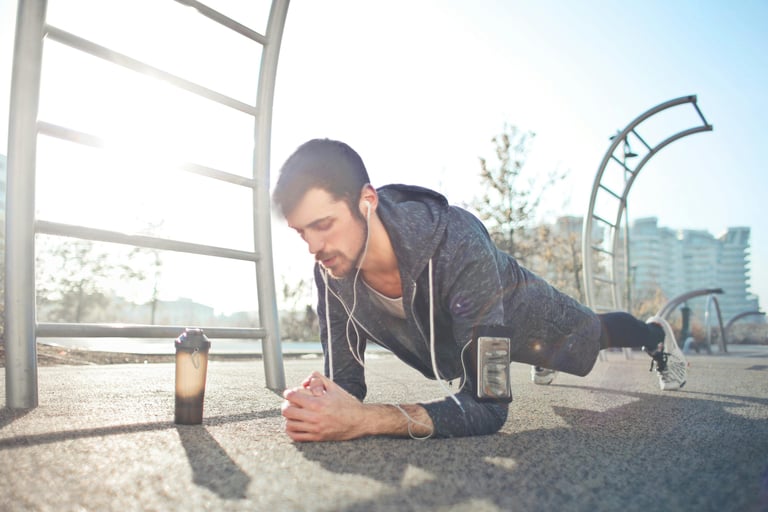
The plank is a highly effective core-stabilizing exercise that engages multiple muscle groups, making it a foundational movement for any fitness routine. To perform a plank correctly, start by positioning your body face down on the floor. Place your forearms on the ground with your elbows aligned under your shoulders. Extend your legs behind you, toes tucked under, and lift your body off the ground, forming a straight line from head to heels. Ensure that your hips do not sag or lift excessively; maintaining a neutral spine is key. Aim to hold this position for 20 to 30 seconds initially, gradually increasing the duration as you build strength.
There are several modifications to consider when attempting planks to accommodate different fitness levels. Beginners may find it helpful to perform the plank on their knees, which reduces the amount of weight supported by the arms and core. Another option is the forearm plank, where you can rest on your forearms while keeping the rest of your body aligned. For more advanced practitioners, consider trying side planks or plank variations that include leg lifts or reaching movements to further challenge stability and strength.
Holding a plank for extended periods can be a challenge, but there are several tips to help increase your endurance. Focus on maintaining controlled breathing, engaging your core muscles, and visualizing a strong, stable position. Implementing these techniques can provide the necessary mental and physical fortitude to extend your plank time. The benefits of a strong core extend beyond aesthetics; a stable core can improve posture, reduce back pain, and enhance overall physical performance in daily activities. Engaging in plank exercises regularly is thus an excellent approach to improving core strength and overall health.
Exercise 4: Jumping Jacks
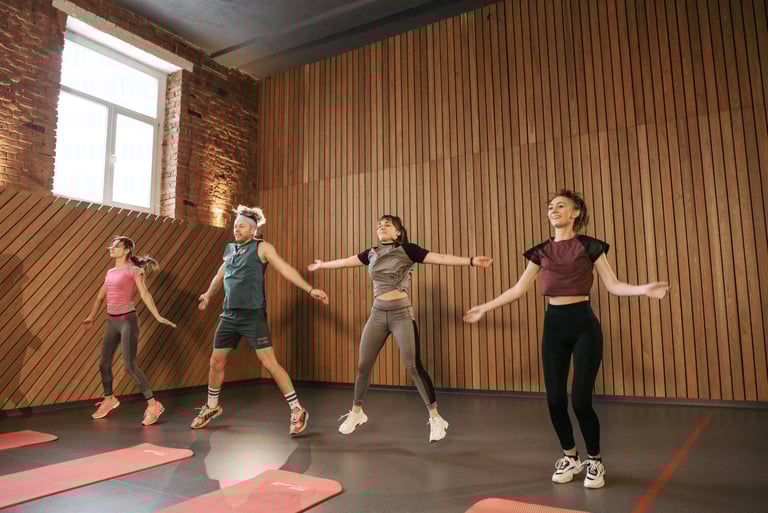
Jumping jacks engage multiple muscle groups at the same time. Your legs — including calves, quadriceps, hamstrings, and glutes — are activated with each jump. The shoulders, upper back, and arms work as you raise and lower your arms, while your core muscles, including the abs and obliques, stay engaged to keep your body balanced throughout the movement.
To begin jumping jacks Start by standing tall with your feet together and arms at your sides. Jump your feet outward to a position wider than your hips while simultaneously raising your arms overhead until your hands nearly meet. Jump back to the starting position, keeping a steady rhythm. Slightly bend your knees when landing to protect your joints and engage your core to maintain stability. For a lower-impact variation, step one foot out at a time instead of jumping.
Jumping jacks are an excellent cardiovascular exercise that raises your heart rate and improves circulation. They help burn calories, build endurance, and enhance coordination and agility. Whether used as a warm-up or a high-energy cardio exercise, jumping jacks strengthen both your upper and lower body while improving overall fitness.
Exercise 5: Mountain Climbers
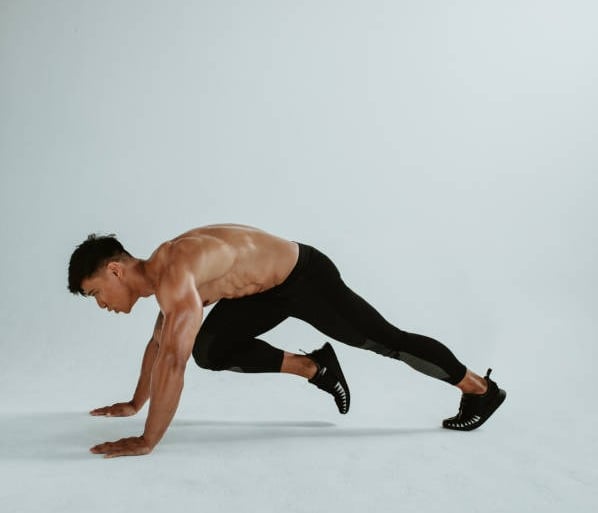
Mountain climbers are a full-body exercise that primarily targets the core, including the abs and obliques, which work hard to stabilize your torso throughout the movement. The shoulders, chest, and arms are engaged as they support your body in the plank position. Your legs — particularly the quadriceps, hamstrings, and glutes — are constantly active, driving the running motion. This combination of upper-body, lower-body, and core engagement makes mountain climbers highly effective for building strength, stability, and endurance simultaneously.
Mountain climbers are a dynamic exercise that combines strength training with cardiovascular conditioning. They help increase your heart rate, improving endurance and cardiovascular health, while simultaneously strengthening the core and toning the arms, shoulders, and legs. This move also improves coordination, agility, and overall body control. Because it engages so many muscles at once, mountain climbers are excellent for burning calories efficiently and conditioning your entire body in a short period of time, making them perfect for home workouts or high-intensity circuits.
Start in a high plank position with your hands directly under your shoulders, keeping your body in a straight line from head to heels. Engage your core and glutes to prevent your hips from sagging. Bring your right knee toward your chest, then quickly switch legs as if you are running in place. Keep your movements controlled and steady, landing softly on your toes to protect your joints. Aim to perform this exercise for 30–45 seconds, maintaining proper form rather than speed. For beginners, a slower pace or stepping one leg at a time is a good option.